
Printful Publishes Sublimation Printing Guide Covering the Four-Step Process
New resource compares sublimation with screen printing, DTG, and DTF, and sets out file rules from a 150 DPI minimum to
Press Release Disclaimer: This is a press release distributed through the XPR Media network. It has not been independently verified by our newsroom.

New resource compares sublimation with screen printing, DTG, and DTF, and sets out file rules from a 150 DPI minimum to full-bleed PNGs with no white borders.
CHARLOTTE, NC, UNITED STATES, September 29, 2026 /EINPresswire.com/ — Printful, a leading global print-on-demand and fulfillment company, has released a new guide explaining how sublimation printing works, where it outperforms other decoration methods, where it cannot be used at all, and how to prepare artwork for it. The resource is aimed at sellers choosing a printing method for polyester apparel, drinkware, and home decor, and closes with a walkthrough of free sublimation designs in Printful’s Design Maker.
Dye That Becomes Part of the Fabric
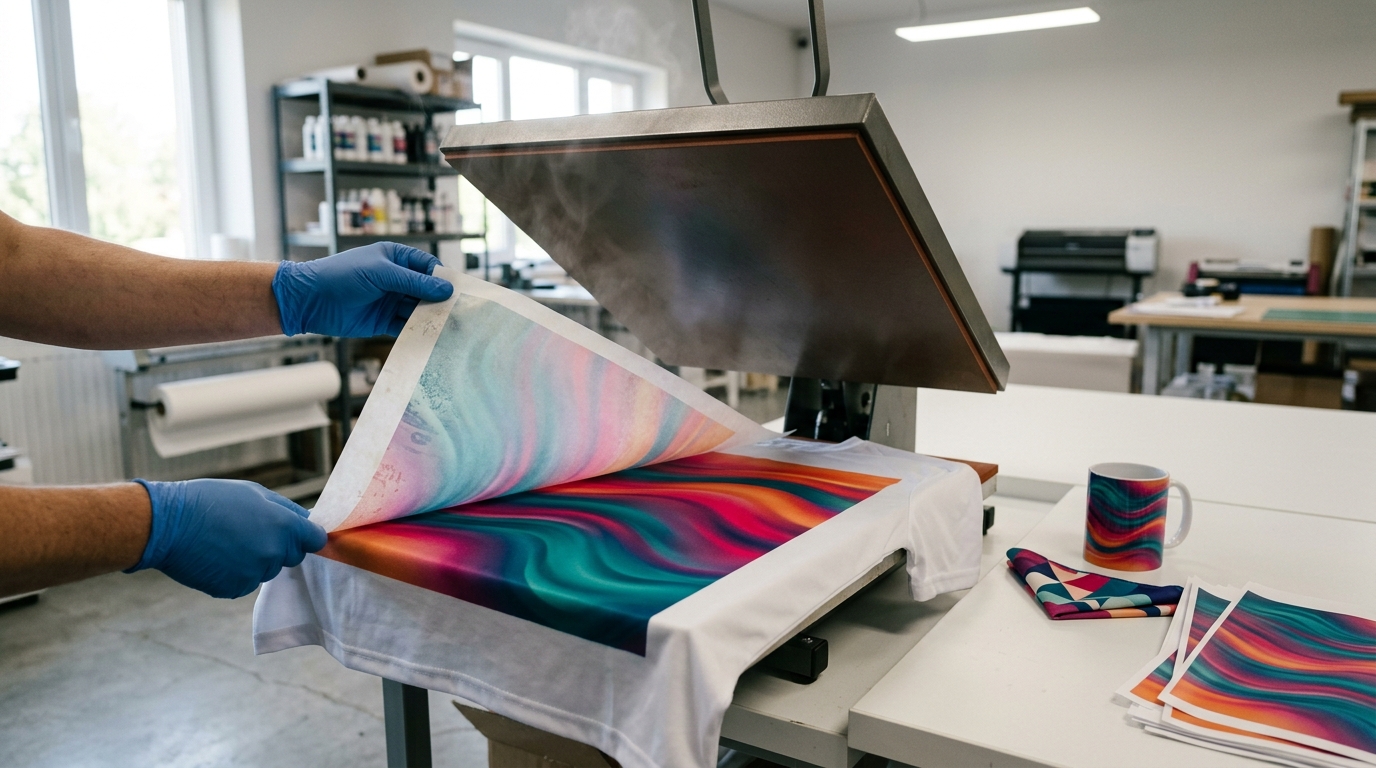
Printful’s what is sublimation printing guide defines the method as a digital process that uses heat, pressure, and time to transfer dye directly into a material, so the ink turns to gas and bonds at a molecular level instead of sitting on the surface. The process has four steps: the design is printed onto transfer paper with sublimation inks, the paper is placed on the product and heated, the heat and pressure turn the solid dye into gas that the material absorbs, and the dye cools and sets into a permanent print.
According to the guide, that chemistry is behind sublimation’s five advantages: an unlimited color range that reproduces gradients and photographs without dot patterns or raised edges, prints that do not crack, peel, or fade because nothing sits on top of the fabric, quick turnaround with no screens or plates to prepare, a wide range of blanks from clothing to home goods, and no order minimums, which lets print-on-demand sellers offer one-off sublimated products without holding inventory.
Where Sublimation Stops
The resource is equally direct about the limits. Sublimation only works on 100% polyester, high-polyester blends, or hard goods with a polymer coating, and lower polyester counts fade faster, while cotton, silk, and leather are not viable because the dye washes out of natural fibers. Because the process has no white ink, it is confined to white or very light base colors, with silver items such as water bottles printing less vibrantly and dark colors showing only faint traces. Pre-sewn garments can also show white creasing along seams and folds where the transfer paper does not reach, which Printful avoids with its cut-and-sew all-over print method, printing the fabric flat before it is cut and sewn. Sellers who prefer natural fabric are pointed to Printful’s all-over cotton technique, which uses water-based pigment inks for seam-to-seam coverage on cotton.
A comparison section sets sublimation against three alternatives. Screen printing works on cotton, blends, and synthetics but needs a separate screen per color and a fixed print area, and only becomes more cost-effective at higher volumes. Direct-to-garment printing suits cotton, prints on any fabric color with a white underbase, and is limited to the printer’s platen size, though its pigment can lighten over many washes. Direct-to-film prints the design onto film and transfers it with heat and adhesive, so it works on cotton, polyester, fleece, and nylon in any color, but the print sits on the fabric and feels slightly stiff until it softens; Printful’s own DTFlex technique is cited as a refined version with clean edges, no white borders, and no glue residue.
Products and File Preparation
The guide lists what can be sublimated: polyester t-shirts, sweatshirts, hoodies, windbreakers, leggings, midi dresses, and track pants with seam-to-edge coverage; all-over print hats, bags, scrunchies, gym bags, slip-on canvas shoes, and socks; white glossy, colored-interior, enamel, latte, and black glossy mugs; and blankets, pillows, towels, mouse pads, and custom flags. Printful’s Catalog carries more than 190 sublimation products in total, including swimwear, hats, mouse pads, and activewear such as polyester custom tank tops.
“Sublimation is the method sellers ask about most and misunderstand most. It gives edge-to-edge color that never peels, but only on the right fabric, and this guide makes that trade-off clear,” said Davis Sarmins, Director of Growth Marketing at Printful.
For file preparation, the resource specifies PNG or JPG files at a minimum of 150 DPI, with mugs and phone cases requiring 300 DPI, an sRGB color profile, dimensions matched to the print area listed under each product’s File guidelines tab, full-bleed artwork or a transparent background saved as PNG, and no white borders, since any blank area prints as the product’s base color. Sellers without artwork can open any all-over print product in the Design Maker, use the Fill tab to apply solid colors, free graphics, or paid patterns and premium images across every placement at once, and preview the result in the Mockups tab. The full guide is available now on the Printful blog.
About Printful
Printful is a global ecommerce platform and on-demand production partner that helps entrepreneurs and businesses create and sell custom products online. Through in-house production, fulfillment services, ecommerce integrations, and design tools, Printful enables brands to launch and grow without holding inventory.
Maria Kennedy
Printful Latvia AS
email us here
Visit us on social media:
LinkedIn
Instagram
Facebook
YouTube
TikTok
X
Legal Disclaimer:
EIN Presswire provides this news content “as is” without warranty of any kind. We do not accept any responsibility or liability
for the accuracy, content, images, videos, licenses, completeness, legality, or reliability of the information contained in this
article. If you have any complaints or copyright issues related to this article, kindly contact the author above.

Media gallery


